A short visit or a longer terrace walk
For a shorter visit, combine the Albright Visitor Center and Fort Yellowstone buildings with one terrace access point. For more walking, add the lower-to-upper terrace network only if steep grades and many stairs suit the group.
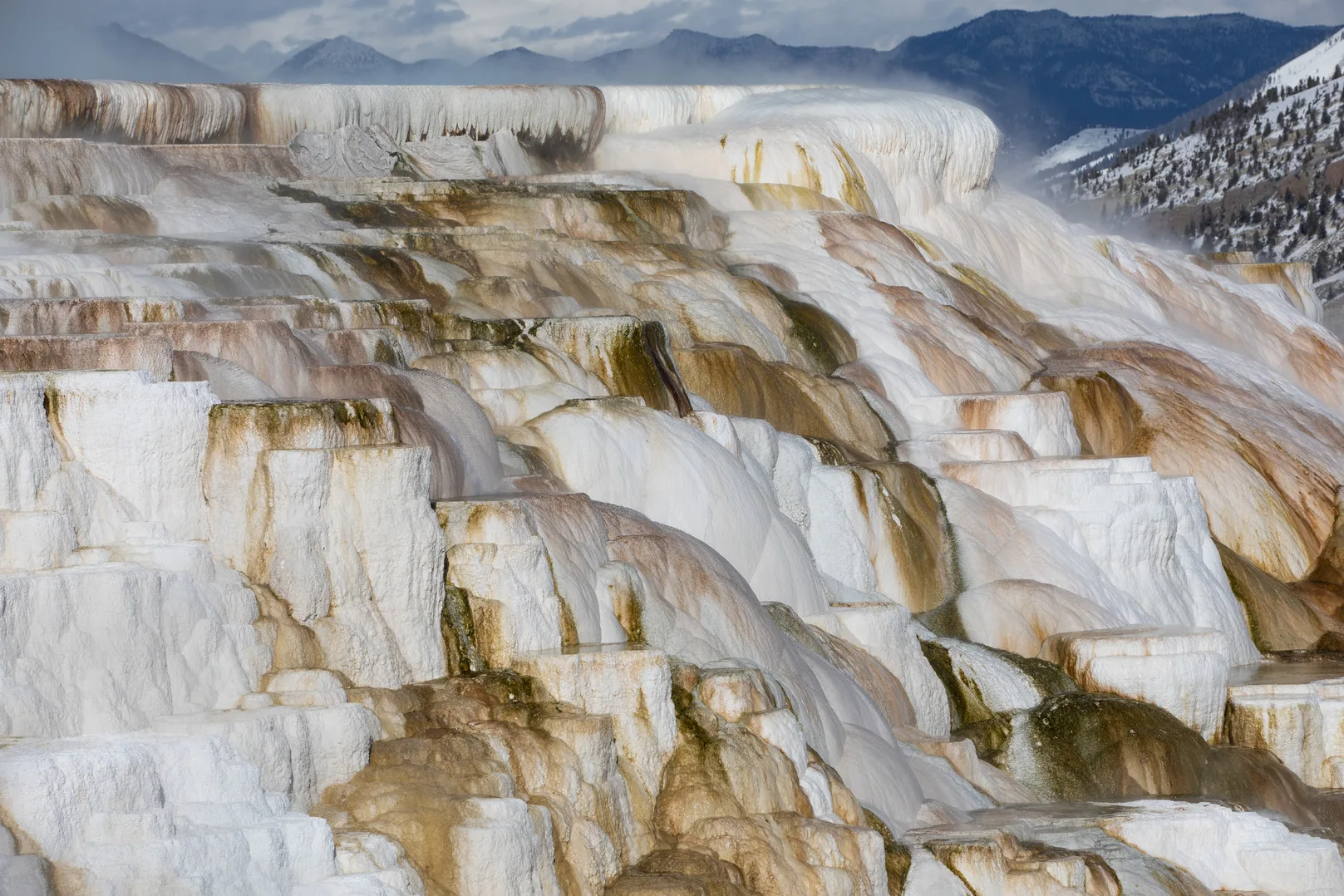
The terraces change as hot water shifts through the ground. A photograph of a colourful spring does not establish that the same flow or colour will be present during your visit. The interest is the changing travertine landscape, not a promised display at one viewpoint.
Begin with the northern road and the visitor centre
Gardiner is outside Yellowstone’s North Entrance. Mammoth lies inside the park, on the northern route that generally remains open to regular cars in winter, subject to conditions. That makes it a different winter proposition from driving to Old Faithful through the seasonally closed interior roads. Use the park road status before setting out; a stay in Gardiner does not override a weather closure.
The Albright Visitor Center is a useful first stop for the area’s history, wildlife exhibits and the day’s local information. The surrounding red-roofed buildings belong to historic Fort Yellowstone, where the US Army administered the park. An outside look at those buildings and a visitor-centre visit can form a shorter outing before or after the terraces.
Choose the terrace access before choosing the walk
Mammoth’s lower and upper terraces can be approached at different points. The entrance to Upper Terrace Drive is two miles south of the Albright Visitor Center on the Grand Loop Road. Do not interpret that road distance as the length of a level path from the village.
The connecting trail between the Lower and Upper Terraces has steep boardwalks and several hundred stairs. Walking the entire connection is a more demanding choice than visiting a viewpoint near a parking area. Decide whether the group wants a short look or that larger climb, then use the NPS terrace information for the access point.
Travertine forms when mineral-rich hot water reaches the surface and deposits calcium carbonate. That process creates the terraces and also changes their appearance. Look at the shapes, deposits and different water flows rather than treating one old photograph as a checklist of what must be active.
Wheelchairs and avoiding the stairs
NPS identifies Palette Spring and the top of Canary Spring as wheelchair-accessible when the ground is free of snow. That does not make the full lower-to-upper trail accessible. Use those separate access points rather than beginning the staircase connection and expecting a step-free route through it.
The Albright Visitor Center has an accessible entrance and designated parking. Its basement restrooms can be reached by elevator. Tactile exhibits, an induction loop at the information desk and audio or large-print materials add different ways to use the visitor centre. The park accessibility guide gives details for the facility and other developed areas.
A road that is open to cars and a boardwalk that is clear for a wheelchair are separate conditions. In snow, ask about the specific terrace approach instead of relying on the summer access description.
Winter changes the terrace visit
Most Mammoth boardwalks are not maintained during winter. The Upper Terraces are also used for skiing or snowshoeing in the winter season; that is a different outing from a normal roadside walk. Keep the village, visitor centre and whatever terrace access is open as alternatives to a longer loop.
A short Mammoth day does not require adding a full northern-range drive. If conditions or daylight reduce the walking, return to Gardiner rather than trying to recover the missed distance through another park district. The season guide separates regular-car access from oversnow journeys.
Entry, pets and thermal areas
The terrace trail does not require its own activity reservation or separate activity fee, but Yellowstone entrance fees may apply. Ordinary pets are not allowed on the terrace trail; park rules distinguish trained service animals from pets.
Stay on the designated boardwalks, trails and roads around thermal features. Do not step onto the white deposits for a closer photograph. The surface appearance does not tell you where hot water or fragile ground lies.
How to combine the stops
For a gentle version, visit Albright, look at the Fort Yellowstone buildings and choose a single suitable terrace approach. For a walking-focused version, spend more of the outing on the terraces and keep the village stop shorter.
Allow the day to remain about Mammoth rather than attaching Old Faithful to the end. The Gardiner gateway guide explains the northern location, while the one-base itinerary puts this visit into a longer stay.
Continue planning
Yellowstone stays: one gateway or a split visit
Choose a northern, western or split-gateway visit from the regions you want to explore. Keep seasonal road access separate from the room reservation.